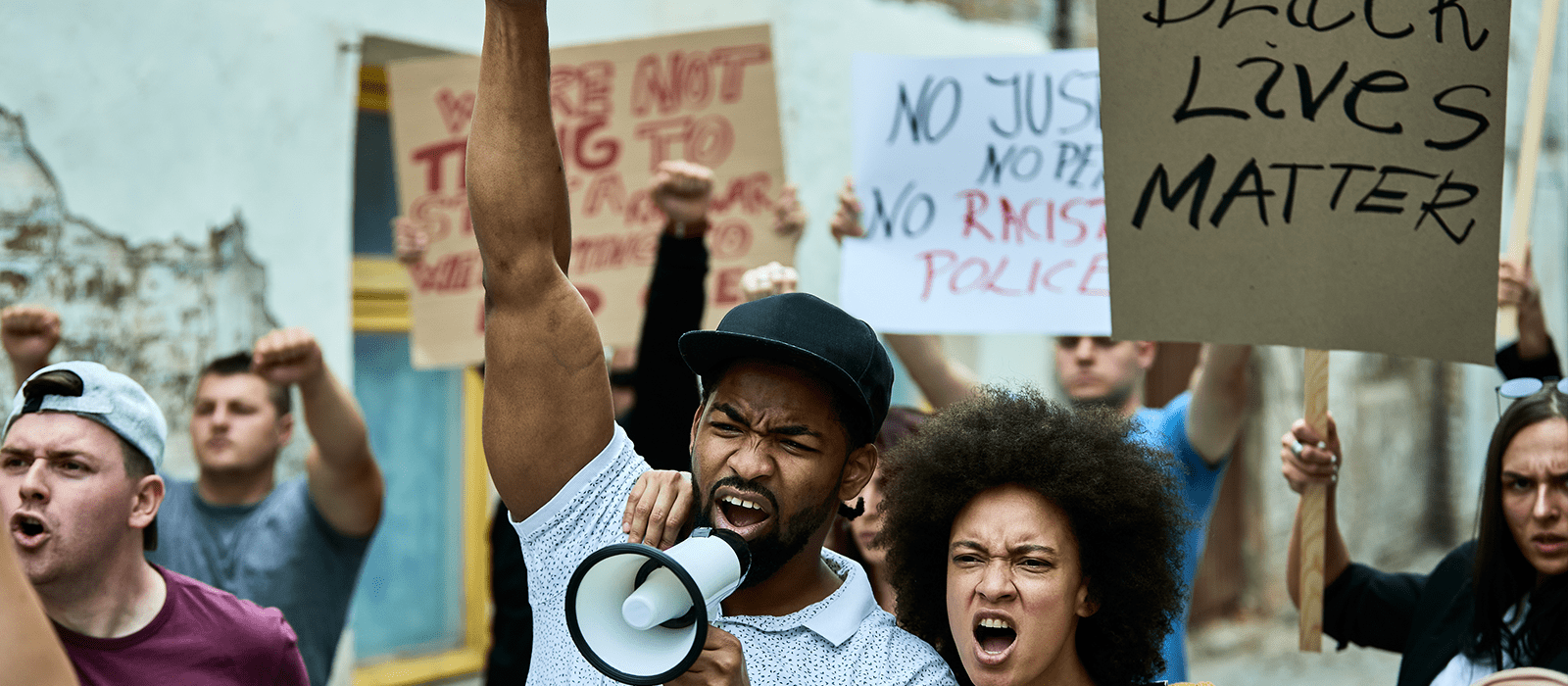
Between a Rock and Hard Place: Police Brutality & Gun Violence in African American Communities
Police brutality and gun violence: two stark issues that seem to be the bookends in the daily narratives of African Americans. This societal pressure is perhaps exemplified last May when Phoenix police officers with drawn weapons traumatized a black mom and her children in a parking lot, the reason being that her four-year-old girl shoplifted a “Barbie-like” doll.
We can discuss illustrations of firearm crime until the body bags come home, but the point is that some type of gun is always pointed at African American neighborhoods. Are there any solutions to blacks living in a state of tension between law enforcement and criminal elements? Before any simplistic solution — which often ends up as an empty political slogan — it’s best to first find the positions of African Americans concerning police brutality and gun violence. These attitudes where found in a recent Ebony/QuestionPro study, conducted on more than 700 African Americans of equal gender and across all demographics.
Police Brutality and Blacks
According to the study, 60 percent of respondents feel that police brutality has increased in the last decade. A vast majority (78 percent) agree/strongly agree that police treat white people better than African Americans. Eighty percent agree/strongly agree that police brutality affects African American communities more than Caucasians and all other minorities. At the same time, 77 percent of respondents agree/strongly agree that police generally treat rich or middle-class people better than lower income individuals.
With these negative attitudes, it’s no surprise that 78 percent of blacks do not trust police officers. You can add to this distrust the reality that 78 percent of respondents feel that police officers who shoot unarmed African Americans are rarely prosecuted for their crimes. However, a majority (42 percent) claim that police brutality is an exception and not the rule when it comes to black neighborhoods (with 38 percent blaming a “a few bad apples” and 17 percent saying suspects don’t comply and then get roughed up).
Still, the perception of police officers is mixed, as best, to the African Americans. According to the study, police officers:
- See themselves as above the law (29 percent)
- Are generally good to civilians (18 percent)
- Don’t respect individual civil rights (17 percent)
- Are racist (14 percent)
- Have hard duties and don’t get enough credit (nine percent)
What are some of the solutions to police brutality, according to the study? Here is the breakdown:
- Provide better training to offices (29 percent)
- Prosecute officers to the full extent of the law (22 percent)
- Provide sensitivity training to both officers and the black community (16 percent)
- Make body cams a requirement in all situations (13 percent)
- Educate neighborhoods on complying with police officers (12 percent)
Although only four percent in the study stated that cities should remove white police officers from black neighborhoods, 45 percent said that police officers, regardless of race, should be required to live in the neighborhood they serve (with 35 percent stating it wouldn’t make a difference and 20 percent being against it).
What about Black Lives Matter, the most impactful modern movement against police brutality? According to the study, 57 percent feel that Black Lives Matter has brought visibility to police brutality, although only 13 percent claim it has succeeded in reducing police brutality.
Guns Violence and Blacks
Sixty-three percent of African Americans surveyed said they don’t own a gun, although 60 percent stated they know someone who does. Of those who own guns, 88 percent claim they possess a firearm license or permit – with 43 percent owning a gun to protect their families and 35 percent to protect themselves while in public.
On a more general level, 58 percent of respondents stated that the 2nd Amendment is the law of the land and should be respected — while 21 percent feel that law is outdated and 21 percent remain unsure about the fate of the amendment. Even with a majority supporting the right to bear arms, most blacks (75 percent) feel that they are either very or extremely concerned on the issue of gun violence in black communities.
The study revealed solutions to gun violence from research participants. A majority (43 percent) feel that easy access to weapons is a chief cause of gun violence in black neighborhoods, while 31 percent stated gun violence is a socioeconomic issue. Only ten percent feel that increased police presence is a solution. A majority (48 percent) claim that more gun control laws should be passed.
Here are other solutions to reducing gun violence, according to the study:
- Expanding background checks (21 percent)
- Ban on assault weapons (17 percent)
- Regulation on ammunition sales (16 percent)
- Ban on gun sales to convicts (14 percent)
- Ban on high-capacity magazines (13 percent)
What about the work of the NRA, which might be the proverbial flipside to Black Lives Matter? As with black views on police officers, it’s a mixed bag. Twenty-six percent of respondents don’t care for the NRA, 23 percent feel it’s an organization that supports white supremacy, and 20 percent state it does more harm than good. Seventeen percent claim that it’s a reputable organization and 15 percent say it protects the 2nd Amendment.
As mentioned, the issues of police brutality and gun violence are complicated – and certainly not mutually exclusive. As President Obama said in a NATO Summit in 2016, “When people say ‘Black Lives Matter,’ that doesn’t mean blue lives don’t matter.” These two colors need to continue listening to their communities and working together to stop red from flowing in black neighborhoods. After all, firearms are the leading death of for black children and teens in America and, as the study details, most African Americans feel police brutality is getting worse.
As Trevor Noah said in a Rolling Stone interview:
“It seems like it’s pro-cop and anti-black, or pro-black and anti-cop, when in reality, you can be pro-cop and pro-black, which is what we should all be. It should be what we’re aiming for.”
As the study reveals, black neighborhoods, many in reality war zones, have given their solutions to removing state-sponsored violence and crime from their communities. The question is will politicians and community leaders listen.
We shall find out.