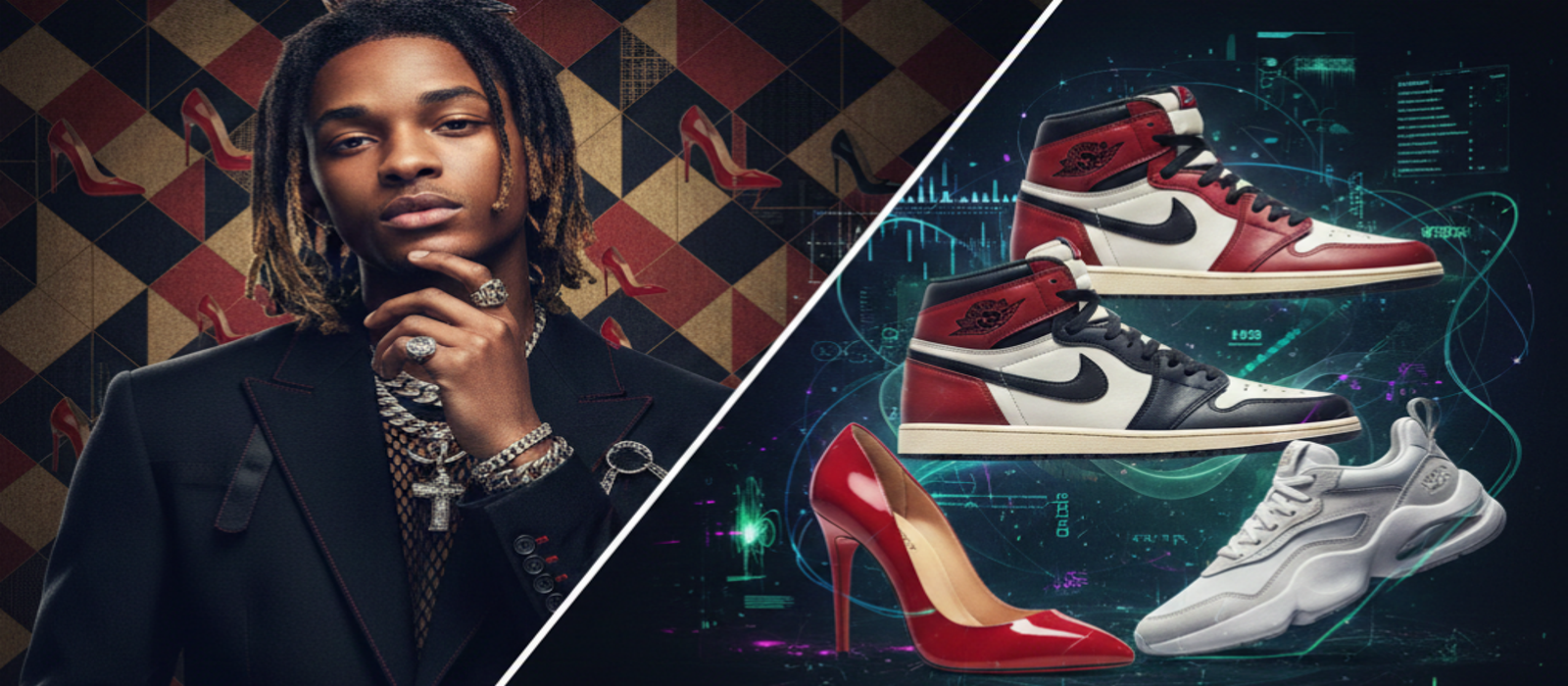
When Christian Louboutin, one of the most storied houses in luxury footwear, named Jaden Smith as its first-ever Men’s Creative Director, it made headlines as a celebrity branding play. But beneath the surface, it signals a far bigger shift in how fashion is imagined, led, and ultimately consumed today.
This is not about Jaden Smith, the celebrity. It’s about Jaden Smith, the cultural architect; someone whose identity, aesthetic autonomy, and community resonance fundamentally shape what fashion is, not just what it sells. His appointment shows that luxury houses are no longer chasing designers who can sketch beautifully; they are chasing voices that hold cultural relevance, voices that speak to identity tribes rather than market segments. That shift represents a profound moment in fashion’s evolution.
Smith’s role at Louboutin, overseeing four collections annually and influencing campaign direction, marks an unusual and deliberate choice. It reflects a reality that designers alone no longer set the agenda; culture makers do. His nearly 20 million followers across platforms bring with them not just attention but cultural capital. This is a currency brands now seek because it’s how communities signal relevance, aspiration, and belonging. Jaden’s influence, rooted in boundary-pushing aesthetics and authentic self-expression, aligns directly with the needs of a younger, more culturally assertive consumer base that demands more than heritage and logo pedigree.
The shift this appointment represents mirrors broader dynamics in fashion where identity, community, and cultural resonance are overtaking the old hierarchies of who “deserves” creative authority. Across luxury and streetwear alike, brands are elevating those who embody lived experience over those who simply execute technical design.
It’s a trend the industry can no longer ignore. Research shows that Black consumers don’t just spend on fashion; they shape it. Spending on apparel and footwear by Black Americans is projected to grow by about 6 percent annually, reaching $70 billion by 2030; part of a broader $445 billion opportunity in the decade ahead. But the real story isn’t only in spending power. Black consumers are disproportionately likely to switch to culturally resonant or Black-owned brands compared to non-Black consumers, up to 2.3 times more likely in fashion. That’s not a fringe insight; it’s mainstream influence at scale.
This cultural force has long been visible in fashion’s top moments. Consider how hip-hop culture reshaped the sneaker market, from Run-DMC’s embrace of Adidas to the Air Jordan phenomenon, where Nike’s modest $2.6 million deal in the 1980s turned into nearly $200 million in returns by 1990. Black households historically spent significantly more on visible goods, clothing, and style signaling than White households with similar incomes, illustrating how deeply style and identity are intertwined in cultural capital.
Luxury brands, historically cautious and slow to change, are now responding not because culture trends are pretty, but because identity tribes move markets. The rise of streetwear, pioneered and normalized by figures like Virgil Abloh, Pharrell, and A$AP Rocky, offers proof. Abloh’s tenure at Louis Vuitton helped legitimize streetwear’s language in luxury, while Phillies’ collaborative work demonstrated that blending cultural fluency with heritage could translate into serious economic impact.
The Louboutin-Smith move must be understood in this context: the role is both symbolic and strategic. Unlike a traditional designer hire, Smith carries with him a narrative of self-authorship, a quality that resonates with consumers who see fashion not merely as clothes, but as identity affirmation. In a global landscape where 78 percent of consumers say social media influences their fashion decisions, cultural voice matters more than ever.
But what makes Smith especially potent is that he doesn’t embody one narrow trend. His style, at once gender-fluid, philosophical, and experimental, reflects larger shifts in fashion consumption. Fashion today is driven by people who live the ideas brands used to sell. This parallels Gen Z and younger millennials’ rejection of outdated norms in favor of creative expression and personal values. These cohorts control around $350 billion in spending power in the U.S. alone and are more likely than previous generations to switch brands based on social and cultural alignment.
This is why brands like Nike and Loewe are so sensitive to cultural vibrations. Nike’s strategy of courting cultural tastemakers rather than relying solely on athletes or traditional design leadership, even reacting with legal disputes when its cultural influence turf gets tested, reveals how seriously the brand guards the signals that drive desirability. Similarly, Loewe’s recent spikes in global search demand signal a hunger for brand personalities that feel alive, not static.
For Black fashion consumers, this moment is particularly resonant. Historically, Black style, from Harlem Renaissance dandyism to contemporary streetwear culture, has embodied identity as resistance and self-definition. Black dandyism, chosen historically as the 2025 Met Gala theme, illustrates how Black fashion has long been a form of cultural self-fashioning and identity assertion, countering oppressive narratives through impeccable dress and creative expression.
Yet, most brands only recently began treating these aesthetic forms as sources of strategic influence, not just diversity tokens. This is where identity-driven fashion tribes outpace traditional luxury: they aren’t defined by heritage alone, but by meaningful cultural narratives that ripple outward. The industry’s embrace of this reality, signaled by moves like the Louboutin-Smith partnership, reflects a broader reorientation where cultural capital surpasses design pedigree in determining relevance.
And this isn’t only about visibility or representation. Black consumers are more likely than non-Black consumers to switch brands, including luxury, based on cultural resonance and leadership diversity. Two of the top ten buying factors for Black luxury shoppers relate to inclusivity and leadership visibility, priorities less present for non-Black buyers. This suggests that brands that understand and authentically engage with cultural self-expression aren’t just seen by Black consumers; they are valued.
This helps explain why traditional fashion taxonomy is breaking down. Gen Z isn’t chasing logos so much as values; they care how a product makes them feel seen in a world hyperaware of identity politics, authenticity, and narrative context. They reject quiet luxury in favor of expressive, boundary-challenging aesthetics where heritage brands feel stale unless they adopt cultural fluency.
In this environment, cultural architects, those who can author narratives that communities live through, hold power. Jaden Smith’s Louboutin role is not a celebrity endorsement. It’s a recalibration of creative authority, where voice informs product, identity informs strategy, and culture leads commerce.
For brands that still see fashion as silhouette plus logo, this is a warning: culture moves faster than calendars, and identities move faster than trend cycles. What matters now isn’t just designing clothes; it’s participating in the cultural conversations that make clothes meaningful. Those conversations aren’t happening in boardrooms. They are happening on streets, on social platforms, in communities where Black consumers continue to define what “relevant” actually means.
In a world where multicultural audiences are reshaping the future of luxury and mainstream fashion alike, Smith’s appointment is a milestone, not because of who he is, but because of what he represents: the ascendancy of culture architects, the dissolution of old creative hierarchies, and a fashion economy increasingly aligned with identity tribes that not only consume but define culture itself.