Loyalty in the modern food economy is no longer driven primarily by taste, convenience, or even price. It is driven by identity. Where and how people eat has become a cultural act, a personal signal, and a reflection of belonging. For multicultural consumers, particularly Black and Latino audiences who increasingly define the mainstream, food brands are not just places to refuel. They are social spaces, emotional anchors, and mirrors of lived experience. This is where Chick-fil-A and Taco Bell have surged ahead, and where Panera continues to struggle. Among younger consumers, in particular, Panera is derided as “expensive hospital food”, no doubt due to its less-than-exciting brand story. Soup in a bread bowl is so 2015, it seems.
Chick-fil-A and Taco Bell understand something fundamental that Panera is still missing. Culture is not an aesthetic layer laid over the menu as it is being finalized. It is not a marketing campaign or a seasonal promotion. Culture is operational. It shapes menu design, pricing psychology, location strategy, service style, social media voice, and emotional positioning. Brands that treat culture as necessary infrastructure rather than a filter build resonance. Brands that treat it as an accessory build distance.
The success of Chick-fil-A among Black consumers and Taco Bell among Latino and Gen Z audiences is not accidental. Both brands have spent years embedding themselves into everyday life, social rituals, and emotional memory. They do not just sell food. They sell familiarity, ritual, and cultural permission. Panera, by contrast, has positioned itself as aspirational, health-forward, and elevated, but often in ways that feel detached from the realities, tastes, budgets, and emotional cues of multicultural consumers. The result is a brand that is respected but not loved, visible but not embedded in the culture, and present but not really on anyone’s radar.
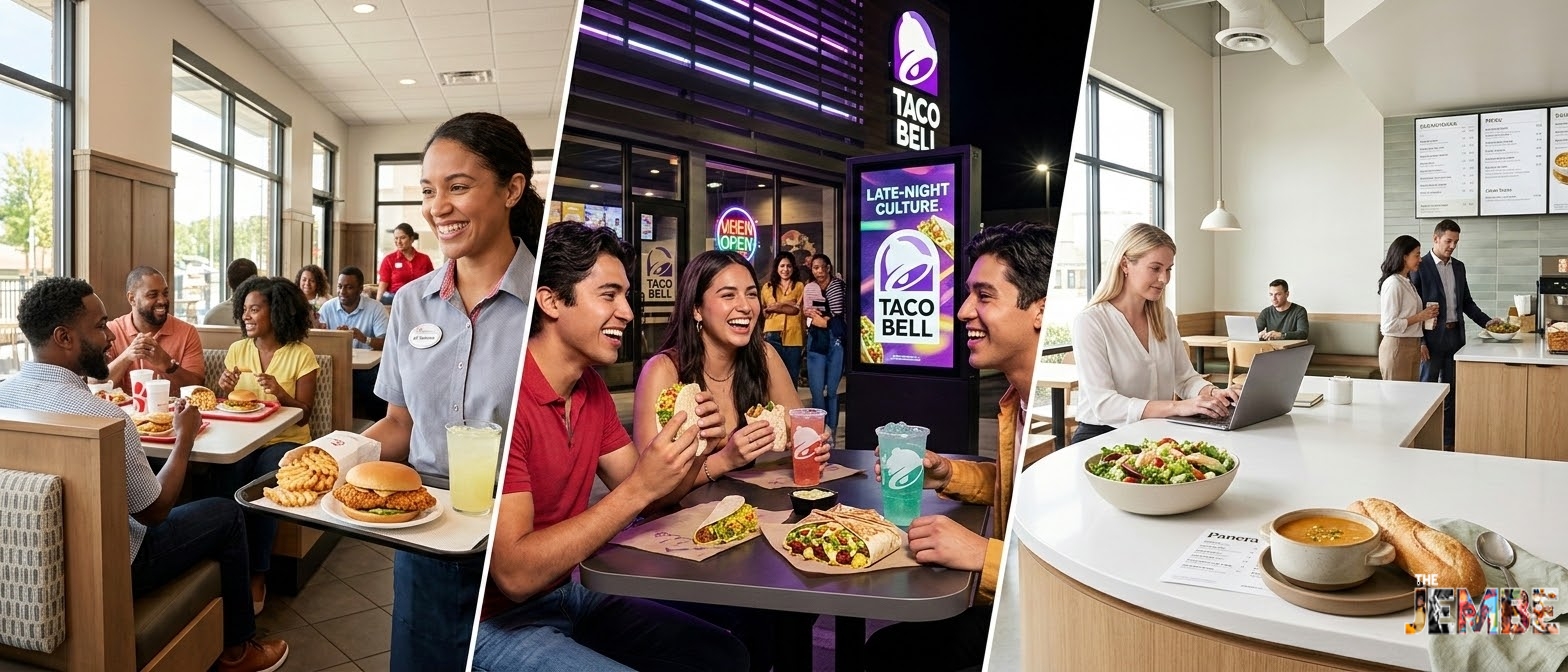
Chick-fil-A’s relationship with Black consumers is one of the most underexamined loyalty dynamics in American food culture. Despite controversies around corporate politics, the brand maintains extraordinary resonance within Black communities. This loyalty is rooted not in ideological alignment, but in lived experience. Chick-fil-A shows up where people live. Its stores dominate suburban and urban corridors, often clustered near schools, churches, and shopping hubs. The brand’s service culture emphasizes warmth, politeness, and familiarity, which aligns deeply with Southern and Black cultural norms around hospitality, respect, and interpersonal recognition. It feels personal. It feels human. The brand continues to keep its stores closed on Sundays, something that also registers with more conservative Black consumers.
Beyond service, Chick-fil-A has mastered ritual. The brand owns breakfast meetings, post-church lunches, youth sports dinners, and late-night runs. Its menu supports these rituals. Fried chicken sandwiches, waffle fries, lemonade, and milkshakes sit comfortably inside Black food traditions without attempting to appropriate or over-modernize them. The flavors are familiar, the portions are generous, and the value feels fair. Chick-fil-A does not attempt to reframe cultural comfort foods as wellness statements or lifestyle aspirations. It simply delivers consistency, quality, and emotional ease. Consumers understand Chick-fil-A.
Taco Bell, meanwhile, occupies a different but equally powerful cultural lane. Where Chick-fil-A wins on warmth and ritual, Taco Bell wins on cultural play, humor, and youth identity. It is not authentically Mexican, but it is deeply embedded in Latino-adjacent flavor logic and late-night culture. Its menu experimentation, price accessibility, and irreverent brand voice have made it a staple for Gen Z, multicultural consumers, and urban youth culture more broadly. You can’t place your finger on what the joke is, but Taco Bell has been in on it for a while now.
Taco Bell’s unique brilliance lies in its cultural humility. It does not claim authenticity. It does not pretend to represent heritage. Instead, it embraces hybridity, remix culture, and playful reinvention. This approach mirrors how younger multicultural consumers navigate identity itself. Fluid, layered, ironic, and experimental. The brand’s collaborations with musicians, designers, gaming platforms, and digital creators reinforce this sense of cultural proximity. Taco Bell does not talk at culture. It moves within it and filters it seamlessly through its brand.
Panera, on the other hand, has built a brand rooted in wellness aspiration, aesthetic minimalism, and suburban comfort. It positions itself as clean, thoughtful, and elevated. On paper, these qualities should resonate with upwardly mobile multicultural consumers who increasingly prioritize health, transparency, and self-care. In practice, Panera often misses the emotional and cultural nuance required to translate aspiration into loyalty. And the lens through which they view its brand positioning hasn’t been updated to account for the TikTok era. Even their take on wellness is woefully out of step.
Panera’s menu architecture leans heavily into salads, soups, and clean-label messaging. While these attributes appeal to health-conscious consumers, they also signal a form of cultural distance. For many Black and Latino consumers, food is deeply tied to memory, family, warmth, and indulgence. Health-forward positioning works best when it honors emotional food traditions rather than replacing them. Panera often feels like it is selling discipline rather than pleasure, restraint rather than joy. It feels like a place you go because you should, not because you want to. Even in the middle of a busy workday, consumers want to feel excited about what they are bringing back to eat at their desks.
Price compounds this distance. Panera occupies a mid-premium space that can feel out of step with everyday realities. Its portions are often smaller than perceived value, and its price points sit in an awkward middle. Too expensive to feel casual, too modest to feel indulgent. For many multicultural consumers navigating rising living costs, Panera becomes an occasional option rather than a habitual one. Chick-fil-A and Taco Bell, by contrast, deliver strong value signals. Consumers leave feeling fed, satisfied, and emotionally rewarded.
Location strategy further widens the gap. Chick-fil-A aggressively plants itself near culturally dense corridors. Taco Bell dominates urban, suburban, and late-night zones. Panera tends to cluster around office parks, affluent suburbs, and commercial developments that skew white and professional. While this strategy supports its brand positioning, it limits organic exposure within Black and Latino communities. Cultural loyalty cannot be built at arm’s length.
Marketing tone reinforces these differences. Chick-fil-A communicates warmth, gratitude, and human connection. Taco Bell communicates humor, irreverence, and cultural play. Panera communicates responsibility, transparency, and wellness. None of these tones are inherently flawed. But only the first two naturally align with the emotional rhythms of multicultural consumer culture. Panera’s tone often feels instructional, controlled, and distant. It lacks the emotional looseness and social energy that drive everyday brand attachment.
The deeper issue is that Panera still treats culture as segmentation rather than foundation. Its diversity initiatives and multicultural marketing efforts feel additive, not embedded. Campaigns appear seasonally or episodically rather than structurally. By contrast, Chick-fil-A and Taco Bell have operationalized cultural understanding. Their store layouts, menu structures, pricing strategies, social media presence, and service rituals all reflect cultural fluency.
This distinction matters because multicultural consumers do not compartmentalize culture. They experience it continuously, on all levels. A brand that only acknowledges culture in advertising feels performative. A brand that reflects culture operationally feels authentic. This is why Taco Bell can launch a limited-edition product and instantly dominate TikTok, while Panera struggles to generate organic cultural heat even with major menu overhauls.
There is also a class signaling dimension that Panera has miscalculated. Its brand positioning leans into aspirational middle-class identity, but in a way that subtly communicates cultural conformity, leaving little room for the average Black or Latino consumer. The message is not just eat better, but be better. For multicultural consumers, whose identities are often shaped by resistance to assimilation, this framing creates friction. Chick-fil-A and Taco Bell do not attempt to elevate identity. They affirm it, and in ways that resonate deeply with non-white audiences.
This does not mean Panera is doomed to a black hole of cultural irrelevance. It means the brand must rethink the assumptions it has made. Multicultural loyalty is not won through surface representation or ingredient transparency alone. It is earned through emotional resonance, cultural humility, and operational alignment. Panera has the infrastructure, scale, and resources to build this. What it lacks is cultural courage.
That courage would require deeper community investment, menu innovation rooted in cultural traditions, partnerships with culturally credible creators, and store experiences that feel warm rather than clinical (another reason for the “hospital food” reference). It would require embracing indulgence alongside wellness, flavor alongside nutrition, and pleasure alongside discipline. It would require understanding that health in multicultural contexts is not about restriction, but balance. Not about elimination, but moderation. It would mean understanding what wellness means to different audiences, many of whom do not automatically lean towards orthorexic behaviors when they want to make healthier choices.
More importantly, it would require listening. Not through focus groups or diversity councils, but through continuous cultural engagement. Brands that win multicultural loyalty embed themselves in cultural rhythms, not quarterly insights. They show up in neighborhoods, sponsor local events, collaborate with grassroots creators, and invest in long-term trust rather than short-term optics.
The competitive reality is that the multicultural consumer is no longer a niche. Black and Latino consumers drive youth culture, digital trends, and food innovation. Their preferences will eventually shape mainstream taste, without question. Brands that fail to win their loyalty will increasingly struggle to win anyone’s. Chick-fil-A and Taco Bell understand this. Panera has yet to fully act on it.
In the near future, food brands will face an uncomfortable truth. Cultural fluency will outperform culinary innovation. Emotional relevance will outperform health positioning. Social belonging will outperform brand prestige. The winners will not be those who design the cleanest menu boards, but those who understand who their customers are when no one is watching.
Chick-fil-A and Taco Bell have become cultural fixtures because they operate from the inside out. Panera continues to operate from the outside in. Until that changes, it will remain a brand people respect, but do not love, admire, but do not crave, and visit, but do not feel as if they belong to. And in today’s food economy, belonging is everything.