For decades, the auto industry has treated cars as rational, necessary purchases, with a checklist to be completed as part of the purchase decision. Horsepower. MPG. Safety ratings. Monthly payments. A spreadsheet logic that assumes people buy vehicles the way they buy appliances: by comparing specs, weighing features, and optimizing value. But cars have never really lived in that world. Cars live in culture. And culture is anything but rational. Culture is where the fun can come in.
What Americans drive is less about what makes sense and more about what means something. Cars are rolling identity statements, status symbols, emotional containers, memory vaults, aspiration machines. They carry the imprint of class, race, geography, gender, politics, and generational values. They are shorthand for who we are, who we want to be, and who we never want to resemble.
If brands want to understand why certain vehicles thrive while others stall, why EVs struggle to break through with key segments, or why loyalty runs deep in some communities and evaporates in others, they have to stop thinking like engineers and start thinking like cultural anthropologists.
Because in America, cars are not transportation. They are cultural objects with their own vocabulary.
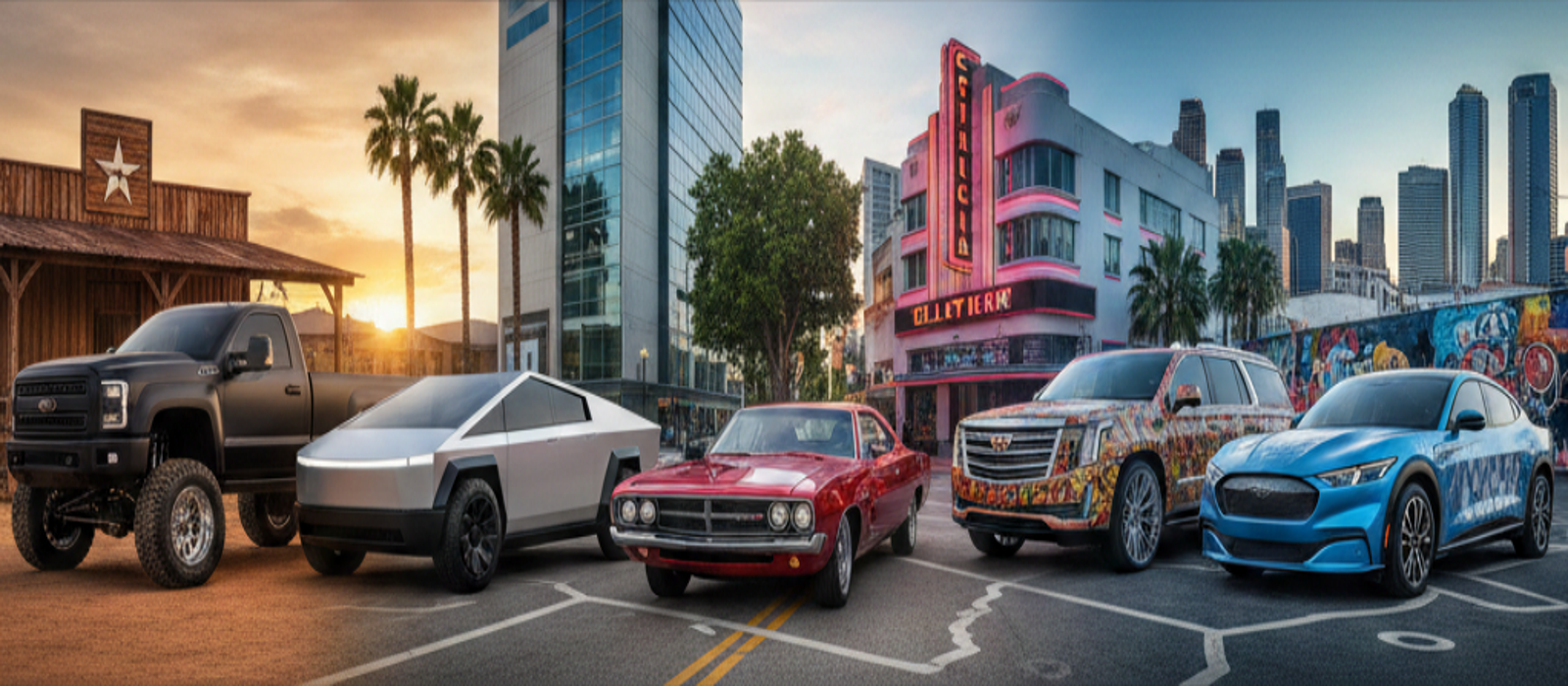
On the surface, the logic behind vehicle choice seems simple: people want reliability, safety, affordability, and comfort. But the moment you step into real life, emotional logic takes over. A lifted pickup in rural Texas is not just about towing capacity. It is about masculinity, independence, and belonging. A Tesla in Palo Alto is not about emissions. It is about futurism, status, and ideological signaling. A Dodge Charger in Atlanta is not just a sedan. It is power, presence, and cultural legacy. We buy cars that reflect how we see ourselves and how we want to be seen.
This is why two people with identical incomes, family sizes, and commute distances can end up with radically different vehicles. One chooses a Subaru Outback. The other buys a BMW 3 Series. The spreadsheet says they are comparable. Culture says they are worlds apart. One signals environmental consciousness, practicality, and subtle affluence. The other signals ambition, upward mobility, and a visible relationship to success. Neither choice is accidental.
Automotive identity shifts dramatically by region. In Los Angeles, cars double as fashion accessories. Color, stance, rims, and customization matter as much as performance. In Detroit, vehicle loyalty is generational, deeply tied to labor history and civic pride. In Miami, luxury and flash intersect with Latin culture, nightlife, and social visibility. In Houston, size, power, and ruggedness dominate, reflecting geography, work culture, and masculinity.
And then there is Atlanta, a city that arguably does more cultural work for the car industry than any ad agency ever could. Here, muscle cars, luxury SUVs, and performance sedans converge into a visual language of aspiration, hustle, and cultural pride. The Charger, Challenger, BMW 5 Series, Mercedes-Benz E-Class, and Cadillac Escalade do not just dominate highways. They dominate music videos, social feeds, and neighborhood streets. They are part of the city’s identity. What you drive in Atlanta does not just say something about your income. It says something about your ambition, your grind, and your cultural alignment.
This kind of cultural geography matters far more than traditional segmentation models. Age, income, and household size barely scratch the surface. Culture explains why certain models thrive in some cities and struggle in others, even when the economics look identical.
Nowhere is the emotional weight of vehicles more pronounced than among Black consumers.
For generations, cars have represented mobility in both the literal and symbolic sense: escape, progress, safety, and autonomy in a country where movement itself has often been politicized. The car has historically been a tool of freedom, a buffer against discrimination, and a marker of success. That legacy still shapes buying behavior today. For many Black buyers, vehicles are not simply personal transportation. They are proof of arrival. They are armor. They are celebration. They are resistance. They are joy.
This is why performance, design, and presence often matter as much as, or more than, efficiency. A quiet, utilitarian vehicle rarely carries the same cultural resonance as something bold, expressive, and powerful. It is not about excess. It is about visibility in a society that has long erased or minimized Black achievement.
Brands that fail to understand this emotional architecture struggle to connect. They offer muted color palettes, sterile interiors, minimalist branding, and abstract sustainability narratives, and then wonder why engagement stalls. Cultural meaning cannot be bolted onto a product at the last moment. It has to be engineered into the experience.
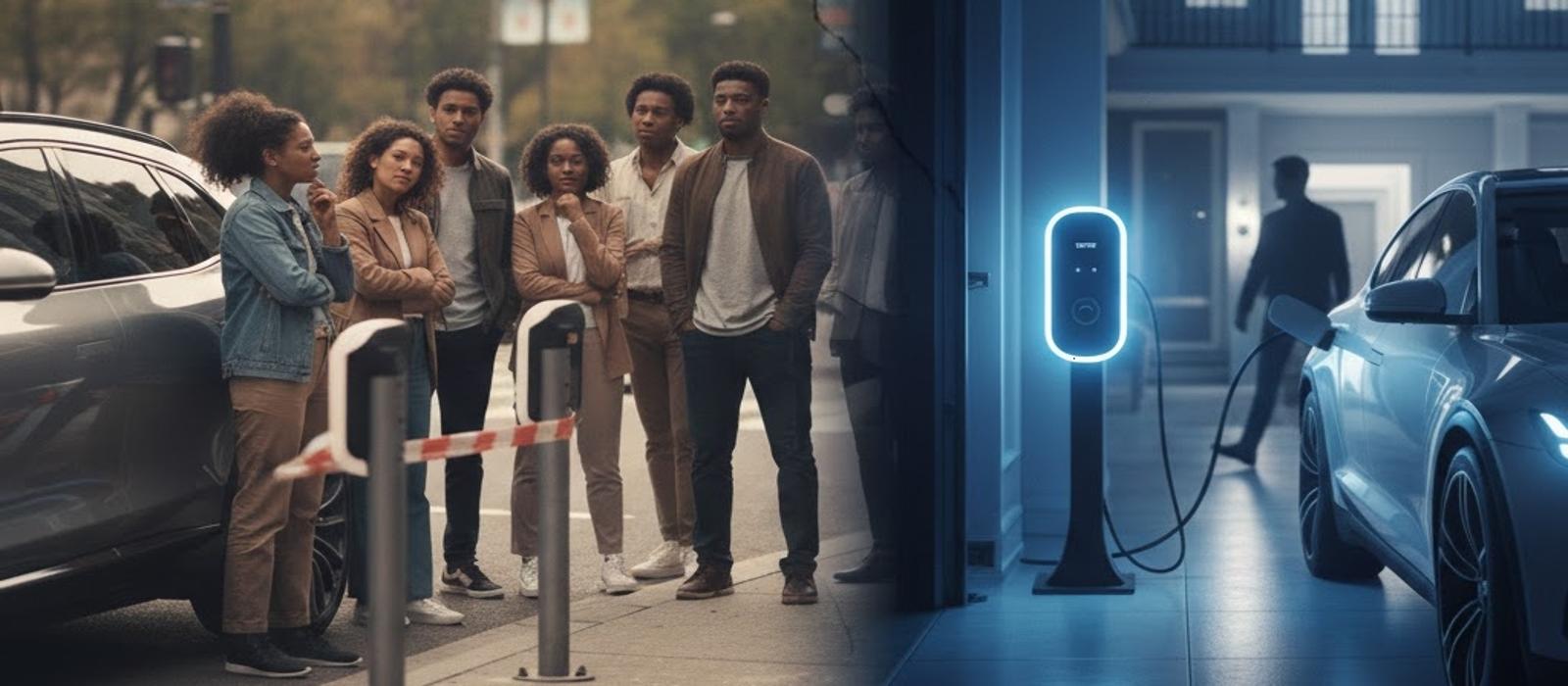
Nowhere is this disconnect clearer than in the EV conversation. The EV category has largely been framed through a narrow cultural lens: environmental consciousness, technological futurism, and suburban progressivism. These narratives resonate deeply with some audiences. But for others, they feel distant, abstract, or even exclusionary.
When EVs are marketed primarily through climate virtue signaling and Silicon Valley futurism, they miss key emotional drivers for Black and multicultural buyers: power, design, aspiration, flexibility, and cultural relevance. This helps explain why interest in EVs is high among Black consumers, but conversion remains uneven. The desire is there. The emotional resonance is not.
What does an electric vehicle mean culturally? What does it say about identity, ambition, masculinity, femininity, success, or community belonging? Those questions remain largely unanswered, and brands pay the price.
Vehicles like the Mustang Mach-E and Ford F-150 Lightning show flashes of cultural fluency by anchoring new technology in legacy nameplates that already carry emotional weight. But much of the category still feels like a cultural blank slate, technologically impressive but emotionally underdeveloped. Until EVs stop being framed as environmental statements and start becoming identity statements, the gap will persist.
The rise of Black cultural influence has reshaped how luxury automotive brands operate. The traditional language of European prestige, heritage, craftsmanship, and restraint is being remixed through hip-hop, streetwear, and digital culture into something louder, bolder, and more expressive.
This shift is visible everywhere: custom wraps, oversized wheels, branded interiors, ambient lighting, performance tuning, and social-first design aesthetics. Cars are no longer static products. They are canvases. And Black consumers are leading that remix economy, and rewriting it in real time. .
From Atlanta to Houston to Los Angeles, customization culture reflects deeper identity narratives: pride, creativity, individuality, and community expression. Brands that embrace this dynamic see loyalty and cultural cachet rise. Brands that cling to rigid definitions of luxury risk becoming culturally invisible. Luxury is no longer about quiet distinction. It is about expressive power.
Cars have long been gendered objects, with trucks and muscle cars marketed to men and compact sedans and crossovers marketed to women. Those lines are dissolving fast, particularly among younger buyers and Black women.
SUVs like the Range Rover, G-Wagon, and Escalade have become powerful status vehicles for Black women, signaling independence, success, and authority. These choices challenge outdated assumptions about who wants power, size, and presence. At the same time, performance sedans and sports cars are increasingly embraced across gender identities, untethered from old marketing scripts. The cultural meaning of cars is expanding. Identity is fluid. And brands that cling to rigid archetypes risk alienating the very audiences shaping the future.
For decades, the auto industry has invested billions in engineering and performance innovation. But the next era of differentiation will not be won under the hood. It will be won in culture. Understanding what vehicles mean, not just what they do, is now the critical advantage.
Cultural intelligence explains why some campaigns ignite while others fall flat. Why certain nameplates carry emotional equity while others feel disposable. Why loyalty persists across generations in some communities and evaporates in others. This is not about adding diverse faces to advertising. It is about understanding the symbolic systems people live inside. It is about decoding aspiration. It is about respecting emotional truth.
Because when people buy cars, they are not just buying mobility. They are buying belonging.
They are buying progress. They are buying protection. They are buying power. They are buying identity. And brands that understand that do not just sell vehicles. They shape culture.